




Incoterms 2020: Roles and Responsibilities of the Buyer and Seller
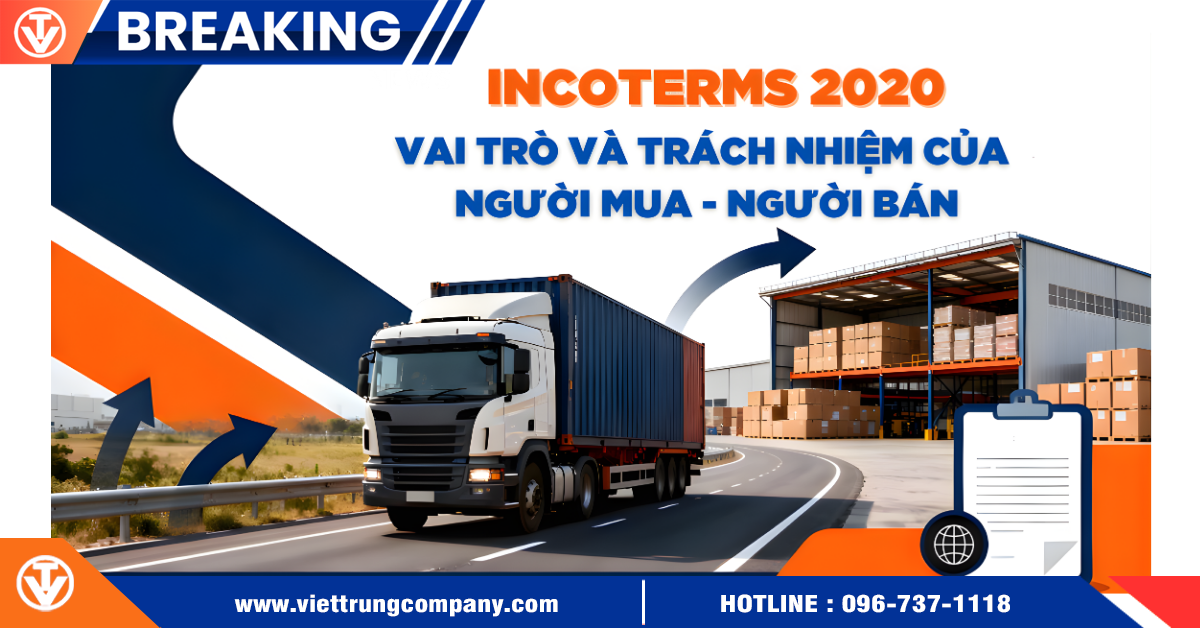
In international trade, Incoterms 2020 is the standard set of rules that helps to clearly define the obligations, costs, and risks between the seller and the buyer. Mastering Incoterms 2020 helps businesses to:
- Minimize legal disputes arising from contracts.
- Accurately estimate transportation and logistics costs.
- Manage cash flow and optimize supply chain operation processes.
Incoterms 2020 is not mandatory law, but a set of rules issued by the International Chamber of Commerce (ICC), only effective when specifically referenced in the foreign trade contract.
What are Incoterms and Why Do Businesses Need to Pay Attention?
What are Incoterms and Why Do Businesses Need to Pay Attention?
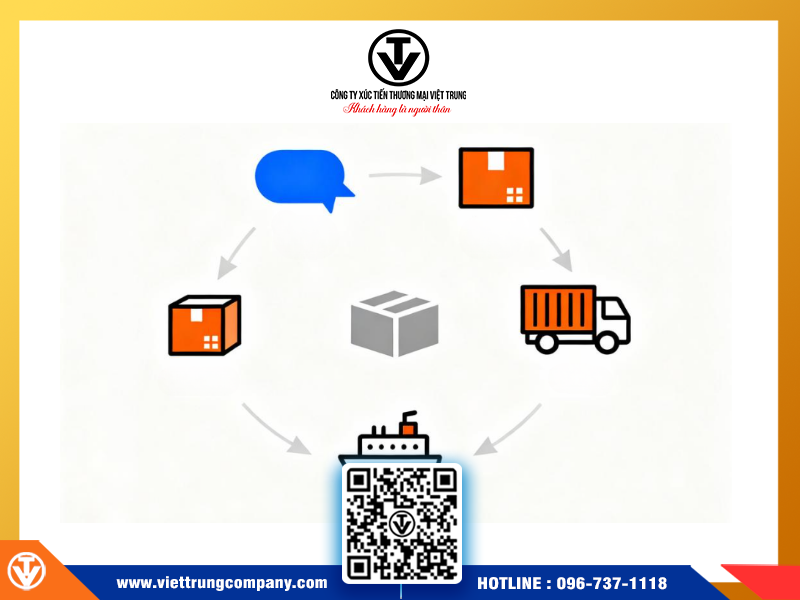
Incoterms is a set of international trade rules issued by the International Chamber of Commerce (ICC) aimed at standardizing terms related to the delivery of goods. The 2020 version officially applies from January 1, 2020, providing detailed guidance on:
- Defining the responsibilities of the seller and the buyer.
- Determining the point of transfer of risk during transportation.
- Regulating costs related to international transport.
When applied correctly, Incoterms 2020 helps businesses to:
- Standardize Obligations: Minimize disputes arising from international sales contracts.
- Accurate Cost Estimation: Calculate freight charges and the reasonable cost of goods, enhancing competitiveness.
- Optimize Logistics Processes: Facilitate swift customs clearance and document handling, saving time and cash flow.
11 Incoterms 2020 Rules – Clear Categorization
Incoterms 2020 comprises 11 terms, divided into two groups:
Group 1: Rules for Any Mode or Modes of Transport (7 Terms)
EXW – Ex Works
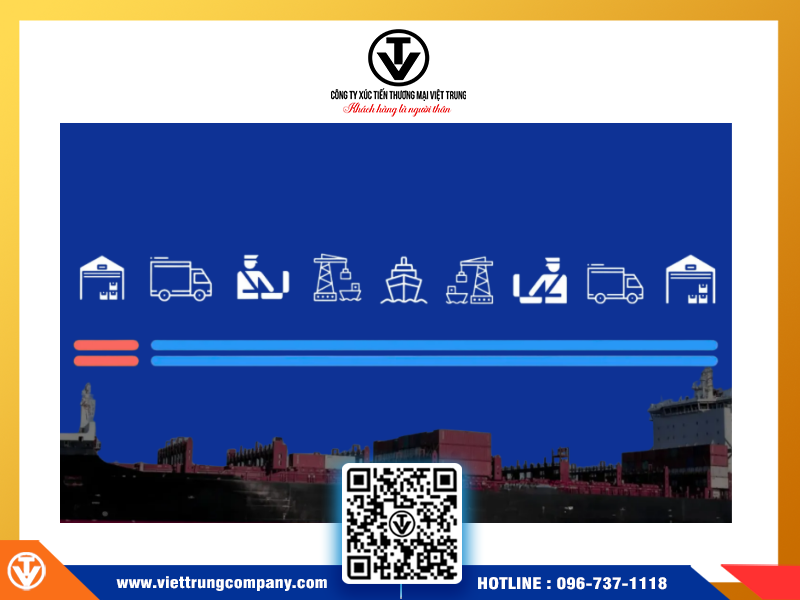
EXW – Ex Works
The Seller delivers the goods at their premises, transferring risk immediately when the goods are made ready for the Buyer. The Buyer bears all transportation costs and risks.
FCA – Free Carrier
The Seller delivers the goods to the carrier nominated by the Buyer, bearing the risk up to this point. The Buyer pays the main carriage cost and subsequent risks.
CPT – Carriage Paid To
The Seller pays the freight for carriage to the agreed destination, but risk transfers when the goods are handed over to the first carrier.
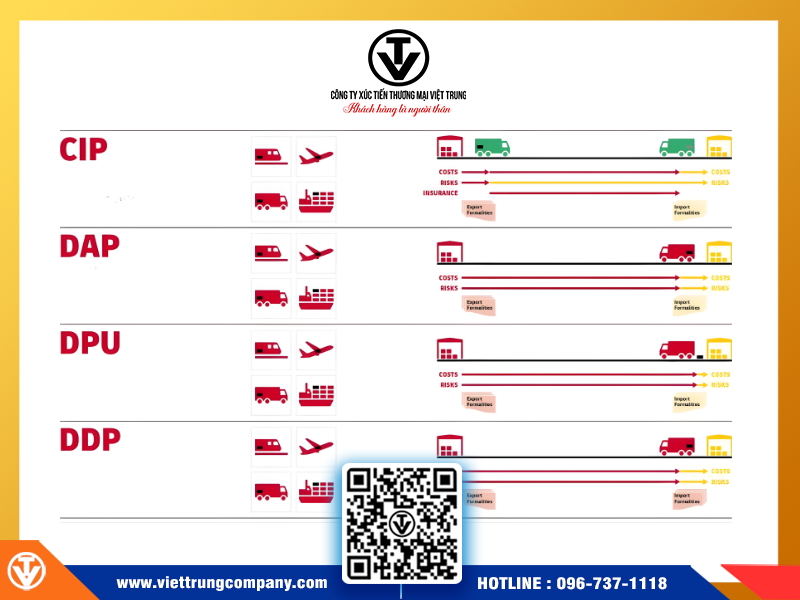
CIP – Carriage and Insurance Paid To
Similar to CPT, but the Seller also purchases cargo insurance for the Buyer, increasing financial protection.
DAP – Delivered at Place
The Seller bears the costs and risks of transporting the goods to the named destination, ready for unloading. The Buyer performs the unloading and import formalities.
DPU – Delivered at Place Unloaded
A new term in Incoterms 2020; the Seller delivers and unloads the goods at the named destination. The Buyer only performs import formalities.
DDP – Delivered Duty Paid
Rules for Any Mode or Modes of Transport
The Seller bears all costs, risks, and duties, delivering the goods at the named destination. The Buyer essentially only receives the goods.
Group 2: Rules for Sea and Inland Waterway Transport (4 Terms)
FAS – Free Alongside Ship
The Seller delivers the goods alongside the vessel; risk transfers immediately when the goods are placed alongside the vessel.
FOB – Free On Board
The Seller bears costs and risks until the goods pass the ship’s rail. The Buyer pays the main carriage costs and insurance from this point.
CFR – Cost and Freight
The Seller pays the freight for carriage to the port of destination, but risk transfers when the goods are loaded on board the vessel.
CIF – Cost Insurance and Freight
Similar to CFR, but the Seller purchases minimum insurance cover for the Buyer. Risk still transfers when the goods are loaded on board.
Quick Comparison Table of Incoterms 2020 Rules
| Term | Who Pays the Cost? | Who Bears the Risk? | Seller’s Responsibility Level |
| EXW | Buyer | Buyer | Minimum |
| FCA | Seller | Buyer (upon delivery to carrier) | Light |
| CPT | Seller | Buyer (early) | Medium |
| CIP | Seller | Buyer (early) | Medium |
| DAP | Seller | Seller (almost to destination) | Heavy |
| DPU | Seller (incl. unloading) | Seller (almost to destination) | Very Heavy |
| DDP | Seller | Seller (almost to destination) | Maximum |
| FAS | Seller (to alongside vessel) | Buyer | Medium |
| FOB | Seller (until goods loaded) | Buyer (when passed ship’s rail) | Medium |
| CFR | Seller pays freight | Buyer (risk from loading on board) | Medium |
| CIF | Seller pays freight & insurance | Buyer | Medium |
Notes on Applying Incoterms 2020 Clauses
Selecting the Appropriate Mode of Transport
The effectiveness of Incoterms 2020 is only realized when the term is applied correctly to the type of transport. For example, terms like FOB, CFR, and CIF are only suitable for sea transport, while FCA, CPT, and CIP are appropriate for multimodal transport. Businesses must pay special attention not to use FOB for containerized cargo, as it can easily cause confusion regarding the point of transfer of risk. Carefully analyzing the characteristics of the goods and the transport route will help select the appropriate term and minimize errors.
Incoterms is Not Mandatory Law
A common misconception is treating Incoterms 2020 as a mandatory legal regulation. In reality, it is a set of rules issued by the ICC and is only effective when referenced in the contract. When applying, businesses should clearly state the clause related to Incoterms to ensure transparency and limit disputes.
New Versions Do Not Invalidate Old Versions
Each Incoterms version, from 2010 to 2020, reflects commercial practices at the time of its release. The launch of Incoterms 2020 does not mean that previous versions are no longer valid. Businesses can still apply older versions if explicitly stated in the contract. Therefore, it is recommended to specify the Incoterms version being applied in the contract (e.g., Incoterms 2010 or 2020) to avoid confusion and ensure the selection of terms suitable for each agreement.
Contact Information:
VIET TRUNG TRADE PROMOTION COMPANY
Vietnam Office
- Hanoi Office: 189 Quan Hoa Street, Nghia Do Ward, Hanoi
- Da Nang Office: 2nd Floor, Savico Building, 66 Vo Van Tan Street, Thanh Khe Ward, Da Nang City
- Ho Chi Minh City Office: 264-264A Nguyen Thai Binh, Bay Hien Ward, Ho Chi Minh City
China Office
- Warehouse 17/2, Da Sha Tou, Guangzhou, China
- Jia Yuan Hotel, 405 YanJiang Dong Road, Guangzhou, China
Warehouse System At:
- Guangzhou – Foshan – Dongxing – Pingxiang – Zhejiang – Chongqing – Beijing – Shanghai
Contact Phone Numbers:
- Northern Region: 0965551166
- Central Region: 0935131816
- Southern Region: 0935086838
- China: 0086 13710964989
- Complaint: 0977 96 96 66

Với hơn 15 năm kinh nghiệm.Việt Trung Company tự hào là đơn vị nhập & vận chuyển hàng Trung Quốc chính ngạch TRỌN GÓI, NHANH CHÓNG, MINH BẠCH. Quý khách chỉ cần cung cấp nhu cầu (loại hàng, số lượng, ngân sách), phần còn lại chúng tôi sẽ xử lý A–Z từ: tìm nguồn hàng/xưởng uy tín, so sánh giá, chốt đơn, thanh toán an toàn, kiểm tra hàng, đóng gói và vận chuyển về Việt Nam, giao tận nơi. Giấy tờ và thuế phí hợp pháp để Quý vị an tâm kinh doanh.