




Secrets to Transparent and Official Chinese Fabric Importation

In the textile and garment industry, importing fabrics from China has long been a familiar choice for garment factories, shop owners, and manufacturing enterprises in Vietnam. The advantages of large-scale production, abundant raw materials, and competitive pricing help Chinese fabrics effectively meet the demands of both subcontracting and private label development.
However, along with the tightening of management regarding product origin, invoices, and documentation, official importation of Chinese fabrics is becoming an inevitable trend. This is not only a legal requirement but also a decisive factor in the stability and long-term business expansion of an enterprise.
Overview of Official Chinese Fabric Importation
What is Official Importation?
Official importation is a form of importing goods with full sales contracts, commercial invoices, valid documents, and customs declarations in accordance with the law. For fabric products, official importation is not simply about moving goods across the border but also involves applying the correct HS codes for the textile industry, fulfilling tax obligations, and complying with specialized management policies.
When importing Chinese fabrics through official channels, businesses can proactively control legal records, ensuring that goods are circulated legally and used safely in production.
Why Should Chinese Fabrics Be Imported Officially?
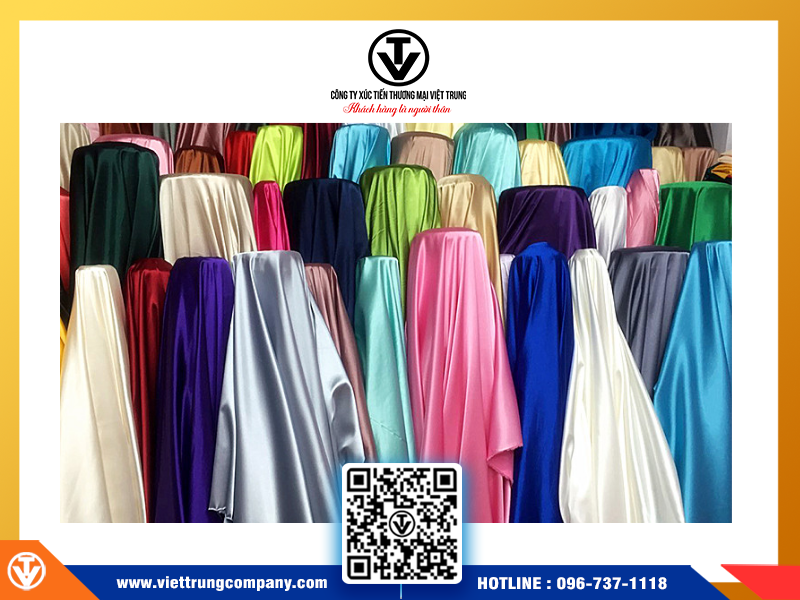
Why Should Chinese Fabrics Be Imported Officially?
Fabric is a high-value, high-volume commodity that is frequently subject to key customs inspections. Importing without adequate documentation can lead to risks such as shipment seizures, penalties, or the inability to meet production deadlines.
Furthermore, without VAT invoices and valid records, businesses will face difficulties in issuing outgoing invoices, signing large contracts, or participating in formal supply chains. Therefore, official Chinese fabric importation is a secure solution that helps businesses minimize risks and build a foundation for sustainable development.
Benefits of Official Chinese Fabric Importation
Ensuring Legality and Transparency
When importing through official channels, every fabric shipment is backed by a clear sales contract, commercial invoice, and customs declaration. This serves as a vital legal basis, giving businesses peace of mind when using materials, circulating goods, and meeting the inspection requirements of authorities.
Proactive Business Operations, Risk-Free
Compared to informal import methods, official importation allows businesses to import proactively, without depending on border status or unplanned costs. This is particularly crucial for garment factories and enterprises with large orders that require a stable and timely supply of raw materials.
Enhancing Reputation with Partners and Customers
For B2B enterprises or fashion brands, proving the legal origin of fabrics is mandatory. Official Chinese fabric importation enables businesses to easily sign large contracts, participate in tenders, and build long-term brand reputation in the market.
Common Types of Chinese Fabrics Imported Officially
Chinese fabric sources are diverse in types and segments. When importing Chinese fabrics officially, correct classification of each fabric line ensures accurate customs declarations and optimizes tax costs.
Common Apparel Fabrics
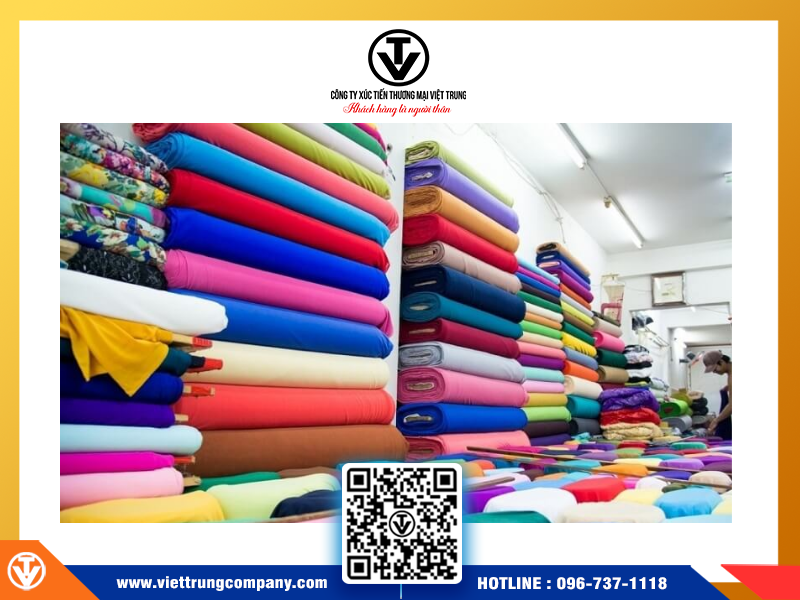
Common Apparel Fabrics
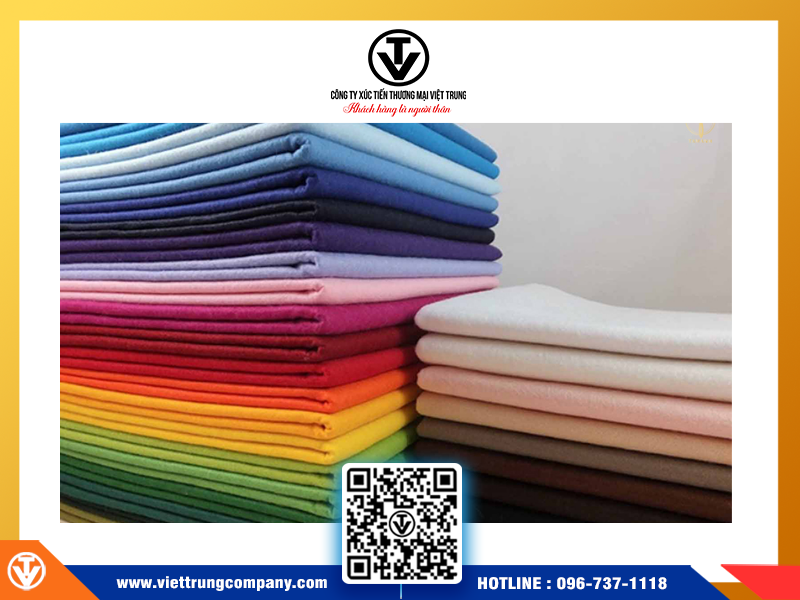
The group of common apparel fabrics includes cotton, spandex, khaki, polyester, and spandex, which are widely used in fashion production, uniforms, and sportswear. These lines have large supplies and stable prices, making them highly suitable for high-volume official importation.
Additionally, denim, fleece, and felt are often imported for fall-winter clothing production. Due to their heavy weight and high value, official importation helps businesses control costs and limit unexpected risks.
Premium and Technical Fabrics
Premium and Technical Fabrics
- Silk, satin, and chiffon lines are often used in high-end fashion, having high value and requiring detailed material declarations. Additionally, wrinkle-resistant, waterproof, and technical fabrics for outdoor gear or specialized uniforms also require clear import records to ensure smooth customs clearance.
The Process of Official Chinese Fabric Importation
Step 1: Finding Reputable Fabric Suppliers in China
Businesses can find fabric sources at major fabric markets, textile mills, or B2B platforms. At this stage, evaluating quality, technical specifications, and the supplier’s capacity is vital to ensure a smooth import process.
Step 2: Negotiation and Signing Sales Contracts
The sales contract must clearly state the type of fabric, specifications, weight/density, value, and delivery terms. This is the legal basis for customs declaration and import tax calculation.
Step 3: Customs Declaration and Import Procedures
Since fabrics have various HS codes, accurate classification determines clearance time and tax costs. Complete and precise documentation will help minimize the risk of tax arrears or penalties.
Step 4: Shipping and Customs Clearance
After completing procedures, fabrics are transported to Vietnam by road, sea, or multimodal transport. Choosing the right transport route helps optimize time and costs when importing Chinese fabrics.
Viet Trung Company – Solution for Official China-Vietnam Fabric Imports
With 15 years of experience in China-Vietnam logistics, Viet Trung Company supports textile enterprises in importing Chinese fabrics officially, transparently, and efficiently.
Contact Information:
VIET TRUNG TRADE PROMOTION COMPANY
Vietnam Office
- Hanoi Office: 189 Quan Hoa Street, Nghia Do Ward, Hanoi
- Da Nang Office: 2nd Floor, Savico Building, 66 Vo Van Tan Street, Thanh Khe Ward, Da Nang City
- Ho Chi Minh City Office: 264-264A Nguyen Thai Binh, Bay Hien Ward, Ho Chi Minh City
China Office
- Warehouse 17/2, Da Sha Tou, Guangzhou, China
- Jia Yuan Hotel, 405 YanJiang Dong Road, Guangzhou, China
Warehouse System At:
- Guangzhou – Foshan – Dongxing – Pingxiang – Zhejiang – Chongqing – Beijing – Shanghai
Contact Phone Numbers:
- Northern Region: 0965551166
- Central Region: 0935131816
- Southern Region: 0935086838
- China: 0086 13710964989
Complaint: 0977 96 96 66

Với hơn 15 năm kinh nghiệm.Việt Trung Company tự hào là đơn vị nhập & vận chuyển hàng Trung Quốc chính ngạch TRỌN GÓI, NHANH CHÓNG, MINH BẠCH. Quý khách chỉ cần cung cấp nhu cầu (loại hàng, số lượng, ngân sách), phần còn lại chúng tôi sẽ xử lý A–Z từ: tìm nguồn hàng/xưởng uy tín, so sánh giá, chốt đơn, thanh toán an toàn, kiểm tra hàng, đóng gói và vận chuyển về Việt Nam, giao tận nơi. Giấy tờ và thuế phí hợp pháp để Quý vị an tâm kinh doanh.